





By Sonu Tyagi, Founder, Go Spiritual & Approach Entertainment
Whenever we talk about spirituality in India, the conversation very quickly turns towards miracles. We hear stories about a spiritual person predicting the future, producing something mysteriously, curing an illness, bringing wealth, solving a business problem or making an impossible situation suddenly possible. Television, social media and even everyday conversations have helped create an image in which the greatness of a spiritual person is often measured by the number of supernatural stories associated with them. The more unbelievable the story, the greater the fascination.

I believe this approach has distracted us from the real meaning of spirituality. Instead of constantly asking, “What miracles can this spiritual person perform?”, we should be asking a far more important question: What miracle has spirituality performed within this person? Has anger turned into compassion? Has greed become contentment? Has fear become courage? Has ego become humility? Has hatred become understanding? Has a restless mind found peace? Has suffering created wisdom instead of bitterness? Has spiritual awakening made that person more sensitive towards the pain of human beings, animals and nature? These, to me, are the real miracles of spirituality.
Getting money unexpectedly is not necessarily a spiritual miracle. Becoming successful in business is not enlightenment. Getting a promotion, buying a bigger house, becoming famous, winning a dispute or seeing a material wish fulfilled may certainly make us happy, but these things should not become our definition of spirituality. If spirituality is reduced to a system in which we pray because we want money, perform a ritual because we want success or follow a spiritual personality because we expect our material problems to disappear, then spirituality becomes another transaction. We are effectively saying: I have prayed, now give me what I want.
The deeper purpose of spirituality is not to make the external world permanently behave according to our wishes. The real purpose is to create such a transformation within us that we develop the wisdom, strength and balance to deal with a world that will never completely behave according to our wishes.
Life will always remain uncertain. Money comes and goes. Careers rise and fall. Relationships change. The body ages. People disappoint us. Success can become failure, and sometimes what appears to be failure can later become the beginning of something meaningful. Spirituality does not guarantee that these realities will disappear. Its deeper gift is that something changes inside us, enabling us to face them differently.

Think of a person who once collapsed emotionally after every setback but gradually develops resilience. Think of someone who carried anger for years and eventually learns to forgive. Think of a person who constantly compared himself with others but discovers contentment. Think of someone whose mind was controlled by fear and anxiety but who gradually learns to observe thoughts instead of becoming a prisoner of every thought. Think of a wealthy or powerful person who finally begins to see dignity in people who can offer him nothing in return. Are these transformations any less miraculous than the supernatural stories we repeatedly celebrate? I believe they are far more meaningful.
The human mind can become its own prison. Ego, jealousy, insecurity, resentment, greed, fear and endless desire can make even a materially successful person deeply unhappy. Real spirituality begins to break these walls from within. The miracle is not that the world suddenly starts obeying you. The miracle is that you no longer require the entire world to obey you in order to remain peaceful.
This is also where spirituality and psychology can have a meaningful conversation. They are not the same thing, and they should not be confused with each other. Modern psychology works through scientific knowledge, research, professional practice and evidence-based approaches. Spiritual traditions have explored the human mind through meditation, contemplation, philosophy, ethical living and inner inquiry. Spirituality should never be presented as a substitute for professional mental-health treatment when such treatment is required. At the same time, some of the deepest spiritual questions are also questions about the human mind: Why do I suffer? Why am I so attached? Why does desire never completely satisfy me? Why do I fear losing what I possess? Why does somebody else’s success disturb me? Can I observe my thoughts without automatically reacting to them? Who am I when my ego, position, wealth and social identity are removed?
Meditation without emotional honesty can become an escape. Prayer without self-examination can become only a ritual. Knowledge without compassion can become another form of ego. Real spirituality should make us psychologically more aware, emotionally more mature and internally more responsible.
Unfortunately, spirituality today is often presented as entertainment. A video claiming that someone performed a supernatural miracle may attract millions of views. A story about a person spending decades serving the poor, overcoming hatred, developing extraordinary inner stability or quietly helping people without seeking publicity may attract far less attention. This tells us something about the audience as well. We demand spectacle, so spectacle is supplied.
When we talk about saints, spiritual teachers and genuinely evolved human beings, why are we so interested in whether they could perform supernatural acts? Why do we not ask how they dealt with their own ego? How did they react when someone insulted them? How did they remain compassionate during suffering? How did they treat people who disagreed with them? How did they behave with the poor, the powerless and those who could offer them nothing? What did they contribute to humanity? How many lives became better because they existed?
The true measure of a spiritual person should not be the miracles attributed to them, but the humanity reflected through their life.
For me, spirituality and humanity cannot be separated. If years of prayer, meditation, pilgrimage, scripture reading and religious activity make someone more arrogant, intolerant, hateful or obsessed with superiority, then something fundamental has been missed. If I claim to love God but cannot feel compassion for another human being because of their religion, caste, class, language or social position, I must question what my spirituality has actually achieved. If I worship divine forms but remain completely insensitive to the suffering of living beings around me, I must examine the depth of that worship.
A truly spiritual person should gradually become more compassionate, humble, honest, forgiving and responsible. Spirituality should expand our humanity, not reduce it.
This is why we must also distinguish genuine spirituality from the business that is sometimes conducted in its name. India has an extraordinary spiritual heritage, but every person wearing religious clothes, giving themselves a spiritual title or gathering a large following cannot automatically be considered spiritually evolved. There are people who exploit fear, grief, illness, financial difficulty and emotional vulnerability. Some promise instant solutions to every problem. Some claim supernatural powers. Some turn faith into personality worship. Some discourage questions and encourage complete dependence on themselves. Others use religion and supposed divine authority to accumulate money, influence or unquestioned power.
A robe does not automatically create wisdom. A huge following does not prove enlightenment. Millions of views on social media do not establish spiritual depth. Extraordinary claims should not become true merely because they are presented in the language of religion.
Questioning such claims does not mean rejecting faith. In fact, questioning exploitation can help protect genuine faith and spirituality. A true spiritual teacher should make people more conscious, more compassionate, more courageous and less controlled by fear. A teacher should help people discover their inner strength rather than make them permanently dependent on another human being. Spirituality should liberate the mind, not capture it.
Religion itself can offer community, tradition, discipline, philosophy, moral guidance and a connection with something greater than our individual existence. But religion without humanity can become an empty structure. We should ask ourselves a simple question: What is the purpose of searching for God if, during that search, we stop seeing the human being standing beside us?
Feeding someone who is hungry, supporting someone going through emotional pain, caring for elderly parents, protecting an animal from cruelty, forgiving when revenge would be easier, refusing corruption when dishonesty would be profitable, remaining humble after achieving success and helping someone without announcing it to the world may appear to be ordinary acts. Spiritually, they can be extraordinary.
Perhaps we need to redefine what we call a miracle. When an angry person becomes peaceful, that is a miracle. When someone survives a devastating failure without losing hope, that is a miracle. When a person carrying hatred for years finally learns to forgive, that is a miracle. When wealth stops controlling someone’s identity, that is a miracle. When success creates humility rather than arrogance, that is a miracle. When suffering produces compassion instead of cruelty, that is a miracle. When someone discovers meaning after feeling completely lost, that is a miracle. When a person begins to feel another living being’s pain as his own, that is a spiritual miracle.
Most of us begin our relationship with God through requests. Give me success. Give me money. Give me health. Give me this relationship. Remove this problem. Defeat my enemy. Fulfil my desire. There is nothing unnatural about asking for help during difficult times. We are human. But perhaps spiritual maturity begins when the nature of our prayer starts changing.
Instead of only asking, “Change my circumstances,” we begin asking, “Give me the wisdom to understand my circumstances.” Instead of saying, “Remove every difficulty,” we begin saying, “Give me the strength to face difficulty.” Instead of asking, “Give me more,” perhaps we ask, “Reduce my greed.” Instead of asking God to make everybody behave according to our wishes, perhaps we say, “Help me understand myself.” And instead of constantly demanding, “Show me a miracle,” perhaps our prayer becomes, “Create the miracle within me.”
That, for me, is the journey from simply expecting things from spirituality to actually experiencing spiritual transformation.
The world does not need more performances of spirituality. It needs more spiritually transformed human beings. We do not need spirituality that promises to magically fill our bank accounts; we need spirituality that enriches our consciousness. We do not need spirituality that makes us obsessed with supernatural powers; we need spirituality that gives us the inner power to face reality. We do not need spirituality that creates superiority and division; we need spirituality that makes us recognise our shared humanity.
The greatest spiritual miracle is not when something impossible happens outside you. The greatest miracle is when something beautiful, compassionate, courageous and conscious happens within you—and that inner transformation changes the way you live, think, love, respond to suffering and treat the world around you.
That is real spirituality. And that is the miracle worth searching for.
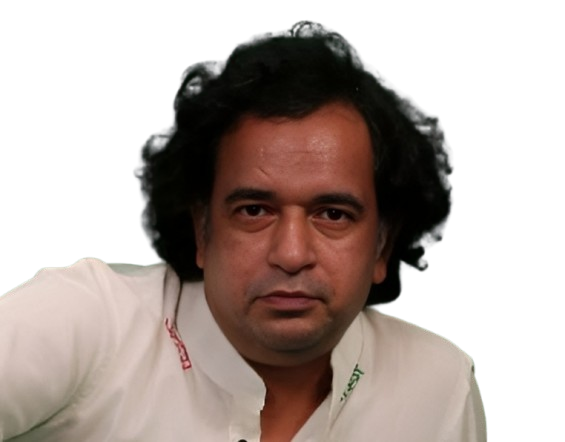
— Sonu Tyagi
Founder, Go Spiritual & Approach Entertainment
Sonu Tyagi is an award-winning writer, director and producer, and the Founder of Go Spiritual and Approach Entertainment. With more than two decades of experience across media, journalism, advertising, public relations, films and entertainment, he has increasingly focused his work on spirituality, mental wellness, humanity, compassion and conscious living. Through Go Spiritual, Tyagi advocates a practical approach to spirituality that goes beyond rituals and external miracles, focusing instead on inner transformation, self-awareness, resilience, compassion and becoming a better human being. He also heads Approach Entertainment, an award-winning company working across celebrity and talent management, film productions, advertising and corporate films, film marketing, events and entertainment marketing.
Visit at www.sonutyagi.com & www.approachentertainment.com