





Asha Bhosle, Sahir Ludhianvi and Ravi’s unforgettable song from the 1965 film Kaajal reminds us that we may hide our actions from the world, but we can never hide from our own mind—the mirror that witnesses our good deeds, our mistakes and ultimately the person we become
By Sonu Tyagi, Founder, Go Spiritual & Approach Entertainment
There are some Hindi film songs that entertain us, some that remain in our memories because of their melody, and then there are rare songs that quietly become a philosophy of life. “Tora Man Darpan Kehlaye” belongs to that rare category. More than six decades after it appeared in the 1965 film Kaajal, its message about the human mind, conscience, karma and inner purity remains deeply relevant to everyone living in today’s world.
The celebrated song was sung by Asha Bhosle, written by legendary poet and lyricist Sahir Ludhianvi, and composed by Ravi. Kaajal was directed by Ram Maheshwari and featured Meena Kumari, Dharmendra, Raaj Kumar and Padmini among its principal cast. Yet the song has travelled far beyond the film because the philosophy contained in its words is universal. It speaks to something that exists within every human being—the mind and the conscience.
At the centre of Sahir Ludhianvi’s writing is an extraordinarily simple but profound idea: our mind is our mirror. A mirror does not manufacture an image; it simply reflects what stands before it. Similarly, our inner consciousness knows the reality of our actions and intentions. The world may know only the personality we present before it, but our mind knows the complete story.
The central lines of the song express this philosophy beautifully: “तोरा मन दर्पण कहलाए, भले, बुरे, सारे कर्मों को, देखे और दिखाए।” These words tell us that the mind observes both our good and bad karma. We may sometimes succeed in hiding our mistakes, weaknesses or intentions from other people, but hiding them from ourselves is far more difficult. Our conscience remains an internal witness.

The song then takes this thought to an even higher spiritual level when it says, “मन ही देवता, मन ही ईश्वर, मन से बड़ा ना कोई।” This is perhaps the spiritual heart of the composition. Human beings often search for peace and the Divine outside themselves. We visit temples, undertake pilgrimages, perform rituals, pray and read scriptures. All of these have their own spiritual importance, but this song reminds us that spirituality must also involve what is happening within our own mind.
When the mind becomes illuminated with compassion, truth, love and wisdom, that light naturally spreads into the world around us. This is beautifully expressed through the idea that when the mind becomes उजियारा, the world too becomes brighter. If our thoughts become peaceful, our words are likely to become gentler. If our mind becomes compassionate, our actions become kinder. If we reduce hatred within ourselves, we contribute less hatred to the world.
The song also asks us not to allow dust to settle upon this shining mirror. Spiritually, that “dust” can be understood as anger, greed, jealousy, hatred, dishonesty, arrogance, ego and excessive attachment. These emotions gradually cloud our ability to see ourselves clearly. Spiritual practice, therefore, is not merely about performing rituals; it is also the continuous process of cleaning this inner mirror.
Another powerful part of the song tells us, “सुख की कलियाँ, दुःख के काँटे, मन सब का आधार।” Life contains both flowers and thorns. Happiness and sorrow, success and failure, appreciation and rejection, gain and loss are all part of human existence. None of us can permanently choose only the pleasant side of life.
This thought connects beautifully with another timeless song I recently wrote about for Go Spiritual, “Waqt Se Din Aur Raat.” That song reminds us that time changes everything. Good times do not remain forever, but neither do difficult times. “Tora Man Darpan Kehlaye” takes the conversation further by asking us to examine the mind that experiences these changing circumstances. The world outside keeps changing, but how are we responding within?
The song gives us another unforgettable thought when it reminds us that a person may run away from the world but cannot run away from the mind. This is a profound psychological as well as spiritual truth. We can change our city, profession, home, relationships or social circle. We can even construct an entirely new public identity. But wherever we go, we take ourselves with us.
Our memories, fears, desires, guilt, unresolved conflicts and conscience travel with us. Changing our external circumstances can sometimes be necessary and healthy, but changing our location alone cannot always resolve what is happening inside us. Spirituality asks us to look inward, understand the source of our suffering and gradually transform ourselves.
The song then moves towards another remarkable lesson with the thought, “तन की दौलत ढलती छाया, मन का धन अनमोल।” Material and physical wealth are compared with a fading shadow, while the wealth of the mind is described as priceless. This message is perhaps even more relevant today than it was when the song was written.
We live in a world that constantly encourages us to acquire more—more money, more possessions, more recognition, more followers, more influence and more status. There is nothing inherently wrong with ambition, prosperity or professional achievement. Money is necessary, careers are important and progress is a natural human aspiration. Spirituality should never be confused with refusing responsibility, ambition or development.
The problem begins when we start sacrificing our inner wealth in order to accumulate external wealth. If success costs us our peace, what exactly have we gained? If money requires us to abandon integrity, are we truly richer? If power makes us arrogant, has it strengthened us or weakened us? If fame makes us completely dependent on appreciation from others, are we genuinely free?
For me, मन का धन represents compassion, peace, wisdom, integrity, love, gratitude, kindness and a clear conscience. A person may possess enormous financial wealth and still be internally disturbed. Someone may have great influence but live with the constant fear of losing it. On the other hand, a person living a comparatively simple life with a peaceful mind, loving relationships and a compassionate heart may possess a kind of wealth that money cannot purchase.
This is why “Tora Man Darpan Kehlaye” becomes much more than a Hindi film song. It becomes a meditation on the way we should live.
Asha Bhosle’s soulful rendition gives Sahir Ludhianvi’s philosophy an almost prayer-like quality, while Ravi’s composition allows the words to remain at the centre. There is no need for complicated spiritual vocabulary. The song communicates enormous truths through simple images—a mirror, light, dust, flowers, thorns, shadows and wealth. Perhaps that simplicity is one reason it has survived for generations.
Its message is also deeply connected with karma. Karma should not only be understood as some distant system of reward and punishment. Every thought, intention and action gradually shapes our character. When we repeatedly choose kindness, kindness becomes part of us. When we repeatedly choose dishonesty, anger or cruelty, those tendencies also begin shaping our personality. Our actions leave their impressions not only on the outside world but also upon our own mind.
At Go Spiritual, we believe spirituality must ultimately lead towards inner and behavioural transformation. Meditation, prayer, worship, temples, pilgrimages, scriptures and spiritual teachers can guide us, but we should also continuously examine ourselves. Are we becoming calmer? Are we becoming kinder? Are we becoming more compassionate? Are we less controlled by anger and ego? Are we treating vulnerable people, animals and nature with greater sensitivity? Are we becoming more truthful with ourselves?
If years of religious or spiritual practice do not make us more humane, then something essential may be missing. The real test of spirituality is not only what we say during prayer but how we behave after the prayer has ended.
There is also an important connection between this song and mental wellness. A peaceful mind does not mean that we will never experience sadness, anxiety, disappointment or difficult circumstances. Life will continue to bring both सुख की कलियाँ and दुःख के काँटे. Spiritual awareness gives us the inner strength to experience both without allowing either to completely define us.
In today’s digital age, the idea of the mind as a mirror becomes even more meaningful. Technology allows us to create carefully managed public images. Social media can make an unhappy person appear happy, an insecure person appear confident and an ordinary life appear extraordinary. We can edit photographs, curate experiences and present only those parts of ourselves that we want others to see.
But there is still no filter for the conscience.
When the phone is switched off, the meetings are over, the applause disappears and we are finally alone with ourselves, the inner mirror remains. It knows what we did, why we did it and what we truly feel.
That is why this song speaks not only to spiritual seekers but to everyone—businesspeople, professionals, artists, politicians, homemakers, students, celebrities, workers and ordinary people trying to navigate life. The inner mirror does not recognise status. It does not care about our bank balance, designation, followers, awards or public reputation.
The message I personally take from “Tora Man Darpan Kehlaye” is beautifully simple: keep your inner mirror clean, protect the wealth of your mind, remain conscious of your karma and never allow material success to cost you your humanity.
The world may know our name, our profession, our position, our wealth and our achievements. It may admire the image we present before it. But when everything external is removed, one witness remains.
Our mind knows who we really are.
And perhaps the true spiritual journey begins when we finally have the courage to look into that mirror, accept what we see and begin transforming ourselves from within.
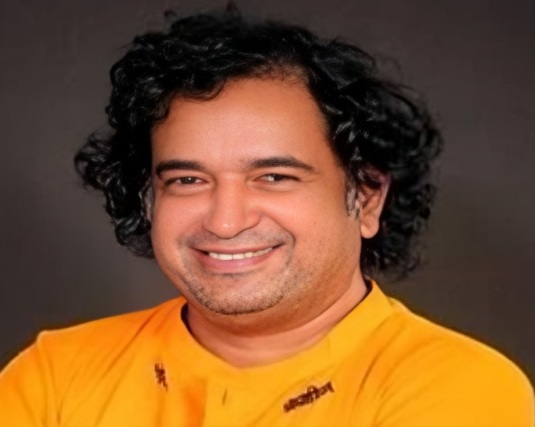
Sonu Tyagi is an award-winning writer, director and producer and Founder of Go Spiritual and Approach Entertainment Group. With more than two decades of experience in media, communications and entertainment, he has worked across films, celebrity management, advertising and corporate film productions, film marketing, events, PR, digital communications and entertainment media. Through Go Spiritual, Tyagi advocates spirituality, mental health and wellness, compassion, vegetarianism, non-violence, animal kindness, philanthropy, Ayurveda and holistic living, spiritual tourism and socially conscious initiatives. Go Spiritual News Magazine & App is the organisation’s media initiative focusing on spirituality, wellness, positive living, humanity and conscious living.
Go Spiritual Organization: www.gospiritualindia.org | Go Spiritual News Magazine & App: www.gospiritualindia.in