





The timeless song from Guide is much more than a cinematic classic. It is a profound reflection on impermanence, attachment, relationships, loneliness and the spiritual wisdom of knowing when to hold on, when to pause and when to let go.
By Sonu Tyagi, Founder, Go Spiritual & Approach Entertainment
Some songs entertain us, some become associated with memories, and some stay with us because they contain truths that we understand only after experiencing life. As we grow older, the same words we heard years ago suddenly begin to mean something entirely different. “Wahan Kaun Hai Tera Musafir Jayega Kahan” from the 1965 classic Guide is one such song. Written by Shailendra, composed and sung by S.D. Burman, it is not merely a film song for me. It is almost a spiritual conversation with every human being who is travelling through this temporary journey called life.
The central image of the song is extraordinarily simple: the human being as a musafir, a traveller. Yet within that one word lies an entire philosophy of existence. We come into this world, spend some years here, meet people, build relationships, acquire possessions, create identities, experience love and heartbreak, achieve things, lose things, and eventually leave. Still, during this temporary journey, we begin behaving as if everything around us permanently belongs to us.
We say my house, my money, my position, my business, my success, my family, my relationship, my reputation and my achievements. Gradually, these things stop being parts of our life and begin becoming our identity. Spirituality reminds us of something that our ego does not like hearing: everything we call “mine” has been given to us only temporarily. We arrived without these things, and ultimately we will leave without carrying them with us.
This does not mean that we should abandon our families, careers, ambitions or responsibilities. I do not believe spirituality means escaping from life. On the contrary, spirituality should help us participate more consciously in life. We should work, create, love, build, succeed and enjoy what life gives us. But there is a profound difference between enjoying something and believing that we own it forever. The spiritual lesson is not to reject the world; it is to live fully in the world without becoming psychologically imprisoned by it.

One of the most beautiful ideas in the song comes through the image of the traveller being asked to stop and rest for a little while under the shade because one does not know where such shade will be found again. I find this metaphor especially meaningful today. Modern life has become an endless race. We are running towards the next promotion, the next business opportunity, the next property, the next relationship, the next achievement, the next holiday and even the next social-media notification. We keep telling ourselves that once we reach the next destination, we will finally relax and become happy. But as soon as we reach one destination, another appears.
In this endless pursuit of tomorrow, we often fail to recognize the shade that life has already given us today. That shade may be our parents sitting with us at dinner. It may be a spouse who genuinely cares for us, a friend who calls without any reason, a child who wants our attention, good health that we take for granted, a peaceful home, a teacher who guides us or a genuine well-wisher who stands beside us without expecting anything in return. These ordinary blessings rarely appear extraordinary while we have them. We understand their value most deeply when they are no longer available.
One day the same house may exist, but the person whose voice once filled it may no longer be there. The dining table may remain, but the family may no longer sit together because children have moved away. Friends who once met every evening may gradually become names in an old contact list. Parents grow older. Children grow up. Relationships change. Careers end. Bodies age. Places change. People leave. This is not a pessimistic understanding of life; it is simply an honest one. And when we understand impermanence properly, it should not make us love life less. It should make us value life more.
If something is temporary, value it while it is here.
The song also speaks about the memories of love that have passed away and become almost like dreams. Most people who have lived long enough understand this experience. Someone who once seemed inseparable from us may become distant. A relationship we believed would last forever may become a memory. Places once filled with emotion may eventually become ordinary locations. Conversations that seemed endless may suddenly stop.
Much of our emotional suffering comes not simply because something has ended, but because our mind refuses to accept that it has ended. We keep revisiting what happened, what could have happened, what somebody should have said or how life might have been different. We remain physically in the present but psychologically trapped in the past.
Spirituality teaches us the difficult art of letting go without becoming bitter. Letting go does not mean that something was meaningless. It does not require us to erase beautiful memories or pretend that love never existed. It simply means accepting that something can be genuine, meaningful and beautiful even if it does not remain with us forever. A flower does not become worthless because it eventually fades. A sunset does not become meaningless because darkness follows it. Similarly, a relationship does not become false simply because its journey has ended.
Perhaps the deepest philosophical moment in the song comes when the world is described as faani, temporary, like writing upon water. What an extraordinary image that is. Try writing your name on water. For a moment there is movement, and almost immediately it disappears. Yet our ego spends an enormous part of life trying to write permanent signatures upon a world made of water.
We want our status to remain. We want people to remember our achievements. We want our possessions to demonstrate our importance. We become upset when someone does not give us enough respect. We compare ourselves with colleagues, neighbours, relatives and increasingly with strangers on social media. We accumulate things and then spend years worrying about protecting what we have accumulated. But time keeps moving without asking anyone’s permission.
The person who was once extremely powerful eventually becomes a photograph. The designation proudly displayed on a visiting card disappears after retirement. The car that once attracted attention becomes an old model. The house somebody spent a lifetime building eventually belongs to another generation. Today’s celebrity can become tomorrow’s memory, and today’s headlines eventually become yesterday’s newspapers.
This should not discourage achievement. I believe people should work hard, build businesses, create art, pursue excellence, earn money and fulfil their potential. The problem begins when achievement becomes identity and possession becomes attachment. Earn money, but do not allow money to own your mind. Build a successful career, but do not believe your designation defines your worth as a human being. Love deeply, but do not convert love into possession. Enjoy comfort, but do not become incapable of living without it. Build a beautiful life while remembering that you are still a traveller passing through it.
The question of who is truly “ours” can initially sound lonely, but spiritually I do not see it as a rejection of relationships. I see it as a challenge to our idea of ownership. There is a tremendous difference between saying “I love you” and believing “I own you.” Much of the pain in human relationships begins when love quietly turns into possession. We expect our partners to behave according to our expectations, children to fulfil our ambitions, friends to always support our opinions and family members to remain permanently available to us.
But every person we love is also a traveller.
Our parents have their journey. Our partners have theirs. Our children have theirs. Our friends have theirs. For some distance, our paths come together. Sometimes we travel together for decades; sometimes only for a few years or even a few moments. We should be grateful for that companionship without believing that another person’s life belongs to us.
People can walk beside us without belonging to us. When we understand this, love does not become weaker. It can actually become purer because affection without possession becomes compassion.
There is another spiritual truth hidden in the idea of the musafir. If all of us are travellers, many of the differences that dominate our lives suddenly become less important. Rich and poor, powerful and powerless, famous and unknown, employer and employee—we are all temporary visitors. Nobody receives permanent ownership of this world. Nobody takes their bank balance, designation, property or social status beyond the final destination.
That awareness should create humility.
Unfortunately, we often understand impermanence intellectually without allowing it to change our behaviour. We attend funerals and speak about the temporary nature of life, then return home and resume an argument over money or ego. We see powerful people disappear from public life but continue behaving as though our own importance will last forever. We watch our parents grow older yet keep postponing spending time with them because we are too busy.
Real spirituality begins when awareness of impermanence moves from philosophy into behaviour.
If life is temporary, perhaps we should forgive a little faster. Perhaps we should say “I love you” while the person can still hear it. Perhaps we should make the telephone call we have been postponing. Perhaps we should sit with our parents while they are still waiting for us. Perhaps we should stop carrying an argument that has already consumed years of a relationship. Perhaps we should ask ourselves whether winning every argument is worth losing people.
And perhaps, sometimes, we should simply stop running and sit beneath the shade life has already given us.
This is where “Wahan Kaun Hai Tera Musafir Jayega Kahan” becomes not merely a song about detachment but also a lesson in mindfulness. The traveller is not being asked to abandon the journey. The traveller is being reminded to pause. There is enormous wisdom in that simple message.
Modern culture glorifies constant activity. If we are not doing something productive, we feel guilty. If we are not progressing, earning, travelling, posting or achieving, we feel as though we are falling behind. Even relaxation has become something we measure. We track our steps, sleep, exercise, productivity and sometimes even meditation.
But spirituality occasionally asks us to stop measuring life and start experiencing it.
Sit quietly for a few minutes. Watch the evening sky. Eat dinner with your family without looking at your phone. Listen properly when someone speaks. Walk somewhere without headphones. Spend time without a screen. Observe your thoughts instead of constantly reacting to them. Become conscious of the extraordinary fact that you are alive.
Sometimes the deepest wisdom is simply to pause.
The song becomes even more meaningful because of its place in Guide, a film whose protagonist travels through love, ambition, moral conflict, failure, isolation and ultimately spiritual transformation. The journey of Raju is itself a movement from external identity towards something more complex and inward. Against this backdrop, S.D. Burman’s earthy, almost wandering voice makes the song feel less like a conventional playback number and more like the voice of an old sage walking beside a traveller and quietly asking questions.
Where are you going? What are you chasing? What do you really own? What will remain? And who are you when all the external labels through which you introduce yourself disappear?
These are spiritual questions, but they are also deeply psychological questions. We construct our identities around our profession, wealth, family, social status, possessions, achievements and increasingly around our digital identities. These things have practical importance, but underneath all of them lies a deeper question: Who am I when everything I normally use to define myself is taken away?
Perhaps this is why a song from Guide continues to speak to us decades later. Technology has transformed dramatically. Cities have changed. Our lifestyles have changed. Relationships have changed. The world is moving faster than Shailendra or S.D. Burman could possibly have imagined. Yet the fundamental human struggle between attachment and impermanence remains exactly the same.
We are still travellers behaving like permanent residents. We are still trying to hold water in our hands. We are still postponing happiness while running towards the next destination. We are still saying “mine” to things that time will eventually ask us to release.
For me, that is why “Wahan Kaun Hai Tera Musafir Jayega Kahan” remains spiritually timeless. Its message is not that we should abandon the world. Its message is that we should learn to live in the world without becoming imprisoned by it. Love without possession. Achieve without arrogance. Earn without greed. Remember the past without becoming trapped inside it. Enjoy without excessive attachment. Rest when life offers shade, and when the moment arrives to move forward, have the courage to continue the journey.
Ultimately, every one of us is a musafir. We arrive, meet people, fall in love, struggle, succeed, fail, build, lose, learn, laugh, cry and rest beneath different forms of shade. Eventually, every traveller must continue towards a destination beyond our complete understanding.
So perhaps the most important question is not simply where the traveller is going. The more meaningful spiritual question is: while you are here, what kind of traveller are you becoming?
Are you travelling with the heavy baggage of anger, greed, resentment, jealousy and ego, or are you gradually making your journey lighter through compassion, forgiveness, gratitude and self-awareness? Are you spending the entire journey worrying about the destination, or are you noticing the people walking beside you? Are you constantly searching for another tree, another destination and another achievement, or can you recognize the shade that life has already given you?
For me, the enduring spiritual wisdom of this extraordinary song can be understood very simply: nothing outside us was ever promised to remain forever. The answer is not to stop loving what is temporary. The answer is to love it deeply, value it while it is with us, remain grateful for the shade it gives us and develop the wisdom to let it go when its journey with us is complete.
We are all travellers. So keep walking, keep learning and keep growing. But when life gives you a little shade, do not be in such a hurry to reach the next destination that you forget to stop and experience it.
Because one day you may look back and realize that the moments you hurried through were actually the life you were searching for.
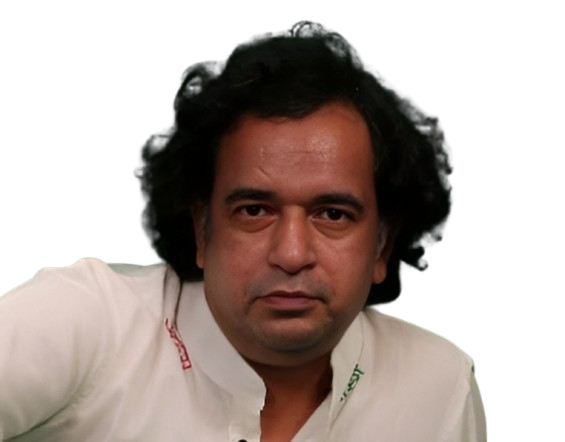
— Sonu Tyagi
Founder, Go Spiritual & Approach Entertainment
Sonu Tyagi is an award-winning writer, director and producer, and Founder of Go Spiritual and Approach Entertainment. With over two decades of experience in media, journalism, advertising, public relations, films and entertainment, he has built a multidisciplinary career in communications and creative industries. Through Approach Entertainment, he works across celebrity management, film productions, advertising, film marketing and events. Through Go Spiritual, Tyagi promotes spirituality, compassion, humanity, mental wellness, vegetarianism, non-violence and conscious living. He believes real spirituality is about inner transformation—developing self-awareness, resilience, peace and compassion while becoming a better and more responsible human being.