





From giving up the throne of Ayodhya to enduring 14 years of exile, Lord Ram’s greatness lies not merely in defeating evil, but in sacrificing personal happiness for duty, relationships and Dharma.
By Sonu Tyagi, Founder, Go Spiritual & Approach Entertainment
Every year, during Dussehra, we celebrate Lord Ram’s victory over Ravan. Huge effigies are burned, fireworks illuminate the sky, and millions celebrate the triumph of good over evil. But whenever I reflect on Lord Ram’s extraordinary life, one thought becomes increasingly clear to me: Ram is Ram not merely because he killed Ravan, but because of the sacrifices he made. His greatness lies not simply in defeating a powerful enemy, but in surrendering personal comfort, privilege, happiness and ambition to uphold Dharma, truth, duty and relationships.
Ravan was a powerful king, a great scholar, a formidable warrior and a devoted worshipper of Lord Shiva. Defeating him was undoubtedly an extraordinary achievement. Yet history remembers countless warriors who conquered kingdoms and defeated powerful enemies. What makes Lord Ram different is that his greatness was established long before the battle of Lanka. He became Maryada Purushottam through his character, restraint, compassion and willingness to place principles above personal desires.
Perhaps the greatest example of Ram’s sacrifice came when he was about to become king of Ayodhya. Loved by his people and respected by his family, Ram was preparing for his coronation when Queen Kaikeyi demanded that Bharat become king and Ram spend fourteen years in exile. Ram could have resisted, questioned the injustice or demanded his rightful throne. Instead, he accepted exile to honour his father’s word. A prince who could have ruled a kingdom willingly chose the hardships of the forest over the comforts of a palace. That sacrifice reveals more about his greatness than any military victory.

Consider how relevant this lesson is today. Families break apart over property disputes, brothers become enemies over inheritance, and relationships are destroyed by ego, wealth and ambition. Ram relinquished an entire kingdom without allowing bitterness to consume him. His life reminds us that possessions can be regained, but love, trust and relationships are far more precious than material wealth.
Ram’s relationship with his brothers offers another extraordinary lesson. Bharat refused to take advantage of Ram’s exile and sought his return to Ayodhya. When Ram remained committed to fulfilling his father’s promise, Bharat placed Ram’s sandals on the throne and governed as his representative. Lakshman, meanwhile, sacrificed the comforts of palace life to accompany Ram into the forest. Their relationships demonstrated that brotherhood, loyalty and love were more important than political power. In a society where families sometimes spend years fighting over ancestral property, the example of Ram and his brothers deserves serious reflection.
Ram’s life was also marked by immense personal suffering. His separation from Sita, her abduction by Ravan and the subsequent struggle to rescue her brought extraordinary hardship. Sita herself made tremendous sacrifices, accompanying Ram into exile and enduring captivity with courage and dignity. The later events involving Sita remain subjects of difficult moral questions and differing interpretations. They remind us that sacrifice must never become an excuse for imposing suffering upon others, and that compassion, fairness and human dignity must remain central to our understanding of Dharma.
Even after defeating Ravan, Ram did not claim Lanka as his own kingdom. Vibhishan was installed as its ruler. Ram’s struggle was not motivated by territorial expansion or personal ambition. This distinction is important because genuine greatness is not measured merely by the ability to acquire power, but by the wisdom and restraint with which power is exercised.
As Founder of Go Spiritual and Approach Entertainment, I believe Lord Ram’s teachings are especially relevant in today’s materialistic and increasingly competitive world. We celebrate wealth, fame, professional success and influence, but often overlook honesty, kindness, sacrifice and compassion. A successful person is not necessarily a great human being. True character emerges when someone sacrifices an unfair advantage for justice, gives up ego to preserve a relationship, chooses honesty over personal gain or helps another person without expecting recognition.
Through Go Spiritual, we encourage spirituality, mental health and wellness, philanthropy, vegetarianism, compassion and social responsibility. I firmly believe that spirituality should make us better human beings. Worshipping Lord Ram, visiting temples and celebrating festivals have deep religious significance, but devotion must also be reflected in our everyday conduct. If we worship Ram while remaining consumed by greed, hatred, dishonesty and arrogance, we have missed the deeper meaning of his life.
Ravan possessed wealth, knowledge, power and a magnificent kingdom, yet his arrogance contributed to his downfall. Ram willingly surrendered a kingdom, endured extraordinary hardships and became an enduring symbol of righteousness. Ravan tried to hold on to power and lost everything. Ram was willing to give up power and became immortal in the hearts of devotees.
The greatest lesson of Lord Ram’s life is that true victory begins within ourselves. When we conquer ego, selfishness, greed and hatred, we move closer to the ideals he represents. When we choose love over pride, generosity over greed and compassion over cruelty, we honour his legacy.
Ram’s victory over Ravan made him victorious, but his sacrifices made him Maryada Purushottam. That is why Lord Ram continues to inspire humanity across generations—not merely as a warrior who defeated evil, but as an enduring example of duty, sacrifice, righteousness and character.
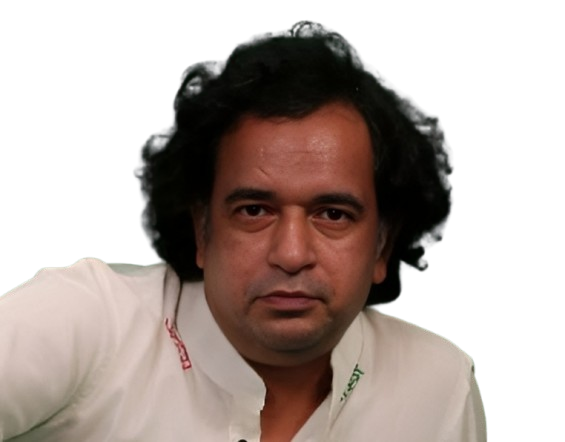
About the Author: Sonu Tyagi is an award-winning writer, director, producer and Founder of Go Spiritual & Approach Entertainment. Through Go Spiritual, he promotes spirituality, mental health and wellness, philanthropy, vegetarianism, compassion, spiritual tourism and social responsibility.
Go Spiritual Organisation: www.gospiritualindia.org
Approach Entertainment: www.approachentertainment.com