



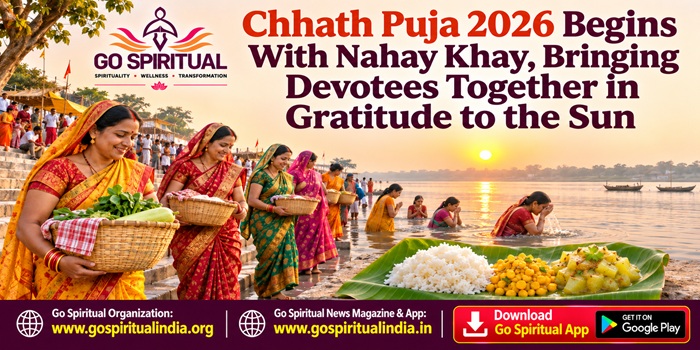

The four-day festival moves from rituals at home to offerings at sunset and sunrise, carrying a message of devotion, discipline and respect for nature.
Go Spiritual News Magazine & App
November 13, 2026 — Chhath Puja begins today with Nahay Khay, the first of four days of worship dedicated to Surya Dev and Chhathi Maiya. Observed widely in Bihar, Jharkhand, eastern Uttar Pradesh and Nepal’s Terai region, the festival brings families together to prepare offerings, sing traditional songs and give thanks for the sun that sustains life. This year’s observance runs from November 13 to 16, with Sandhya Arghya on Sunday evening and Usha Arghya on Monday morning.
The first day begins with a ritual bath and a simple meal prepared with care. On the second day, known as Kharna, those observing the fast break it after sunset with a meal that often includes jaggery-sweetened rice pudding. The next phase of the fast leads into the two main offerings. Behind these rituals is work shared across generations, from washing and preparing ingredients to arranging fruit and homemade thekua in woven bamboo baskets.
Honouring the setting and rising sun
On November 15, devotees will gather at rivers, ponds and other water bodies to offer Sandhya Arghya to the setting sun. Families return before dawn the following morning for Usha Arghya, the offering to the rising sun. The morning prayers are followed by parana, when devotees end their fast. In the hours between the two offerings, the same riverbank can go from a gathering place at dusk to a place of quiet anticipation before first light.

Chhath’s evening offering is one of its most distinctive features. The sun is honoured as it disappears below the horizon and again when it returns. For devotees, the two moments offer a way to express gratitude for what the day has given and to welcome the next morning with prayer. The ritual makes room for reflection on the cycles that shape ordinary life, from the hours of light and darkness to the seasons that govern what grows and when.
How families share the work of devotion
The fast is undertaken by individual devotees, but much of the preparation is shared. Family members help make the prasad, carry baskets to the ghat and accompany those observing the fast. Traditional songs give younger family members a way to learn the stories and customs that older generations grew up with. For families living away from their ancestral homes, preparing the same dishes and singing the same songs can make the festival feel familiar in a different city.
Chhath also brings the relationship between worship and the natural world into view. Sunlight, water and the fruits of the harvest are part of the ceremony itself. That connection continues in practical ways at the ghat, from keeping a clear path for elderly devotees to taking care of the riverbank after the offerings are complete. The work that happens before and after the prayers is part of what allows a community to observe the festival together.
When devotees gather for the final offering on Monday morning, they will have spent four days preparing for a moment that lasts only as long as the first light on the water. The prayers end and the prasad is shared. For many families, that simple act of sharing is how the festival’s gratitude comes home.