



From devotion and fasting to self-discipline, compassion and inner transformation, Navratri reminds us that the true worship of Maa Durga lies not only in rituals but also in overcoming ego, anger, greed and negativity while embracing courage, kindness and righteousness.
Mumbai: Navratri, one of India’s most sacred and spiritually significant Hindu festivals, celebrates the divine feminine energy of Maa Durga, symbolising strength, wisdom, protection, compassion and the eternal victory of good over evil. Observed with prayers, fasting, devotional music, meditation and vibrant cultural traditions, the festival carries a profound message that extends far beyond religious rituals. It reminds humanity that the greatest battles are often fought not in the outside world, but within our own minds and hearts.
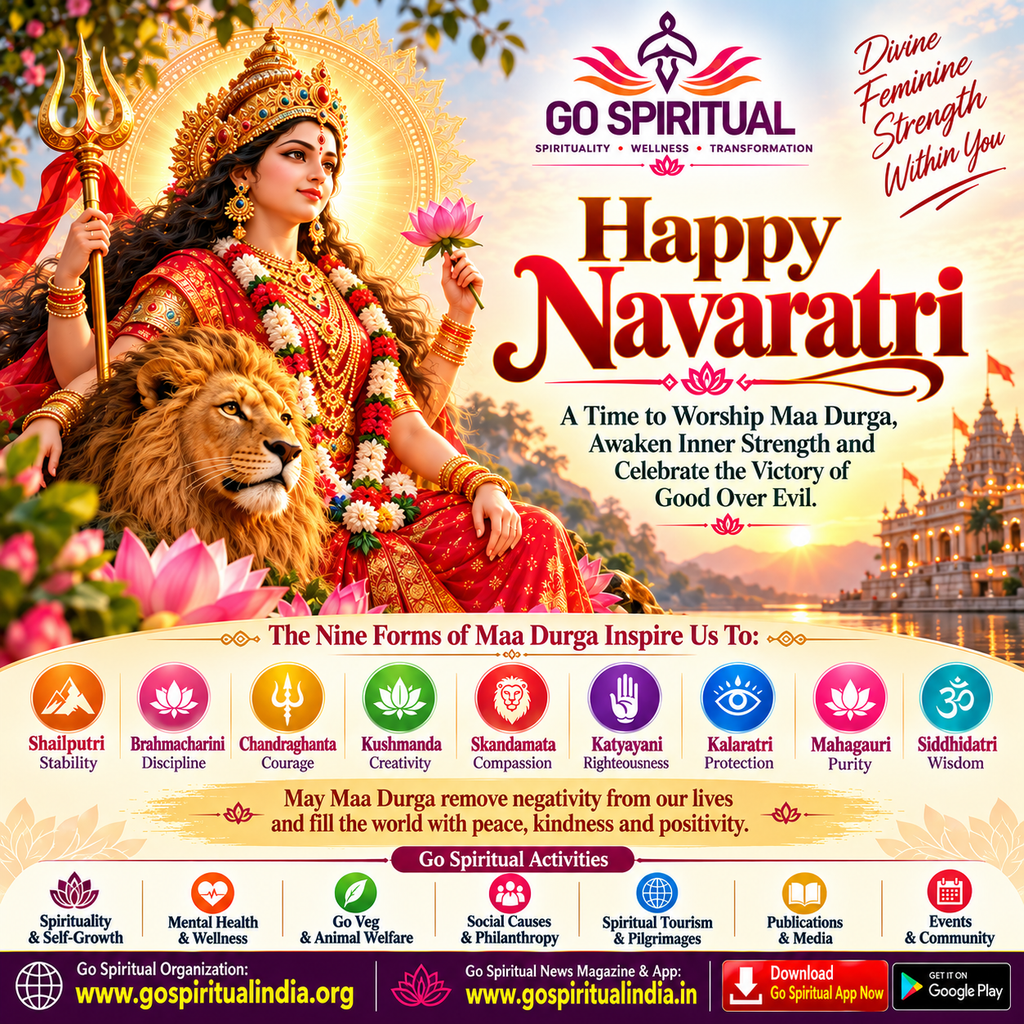
The word Navratri means nine nights, traditionally dedicated to the worship of the nine manifestations of Goddess Durga, collectively known as Navadurga. Each manifestation represents a distinct aspect of divine energy and spiritual development. From Maa Shailputri, symbolising strength and stability, to Maa Siddhidatri, associated with spiritual accomplishment, the nine forms inspire devotees to cultivate courage, wisdom, discipline, patience, compassion and inner awareness.
India observes several Navratri festivals throughout the year, with Chaitra Navratri and Sharad Navratri being the most widely celebrated. The festival brings together millions of devotees across different regions, each expressing devotion through distinctive customs and traditions. While Gujarat celebrates with Garba and Dandiya, West Bengal is renowned for Durga Puja, and northern India observes fasting, devotional gatherings and Kanya Pujan. Despite these cultural differences, the spiritual message remains universal: the triumph of positive forces over negativity and the awakening of divine consciousness within human life.
At the heart of Navratri is the powerful symbolism of Maa Durga’s victory over the demon Mahishasura. According to Hindu tradition, the Goddess defeated the demon after an intense battle, establishing the victory of Dharma over Adharma. Spiritually, Mahishasura can also be understood as representing the destructive tendencies that exist within human beings—ego, uncontrolled desires, anger, greed, arrogance, jealousy and ignorance.

The festival therefore encourages devotees to examine their own lives and recognise the inner obstacles that prevent them from becoming better human beings. Defeating anger, overcoming hatred, controlling selfishness and developing compassion can become meaningful expressions of devotion to the Divine Mother.
For Go Spiritual, Navratri is not merely a celebration of divine power; it is an opportunity for spiritual awakening, self-reflection and personal transformation. True devotion should inspire positive changes in behaviour, relationships and attitudes towards other living beings. Worshipping Maa Durga while continuing to practise cruelty, dishonesty, discrimination or hatred raises an important spiritual question: Have we understood the deeper message of the Goddess?
The festival also highlights the importance of Shakti, the divine feminine energy that sustains creation. In Hindu spiritual philosophy, Shakti represents the dynamic force of existence, reminding society of the sacred significance of feminine strength, wisdom and nurturing power. Navratri consequently provides an opportunity to reflect on the dignity, safety, equality and empowerment of women.
Respect for the Divine Mother should naturally translate into respect for mothers, daughters, sisters, wives, colleagues and every woman in society. A culture that celebrates feminine divinity must also ensure that women experience dignity, freedom, security and equal opportunities in everyday life. Spirituality becomes meaningful when reverence expressed in temples is reflected in human relationships.
Another important dimension of Navratri is fasting, traditionally associated with purification, restraint and spiritual discipline. Many devotees observe vegetarian or sattvic diets, avoid intoxicants and dedicate more time to prayer and meditation. Beyond dietary practices, fasting can encourage individuals to examine their habits, desires and attachments.
However, the deeper purpose of fasting should not be limited to avoiding certain foods. A truly spiritual fast can also involve avoiding anger, negative speech, jealousy, dishonesty and harmful behaviour. Giving up cruelty and cultivating compassion can be just as meaningful as following dietary restrictions.
Through its Go Veg initiative and campaigns promoting Ahimsa, animal welfare and compassionate living, Go Spiritual encourages people to consider how everyday choices can reduce unnecessary suffering. The organisation advocates vegetarianism as a conscious expression of non-violence, kindness and respect for living beings, while recognising the importance of awareness, dialogue and individual choice.
Navratri also offers an important opportunity to reconnect with family and community. In an increasingly fast-paced world, where stress, competition and digital distractions often dominate daily life, collective prayers, devotional music, meditation and cultural gatherings can provide moments of emotional connection and reflection.
The festival reminds us that spiritual strength does not necessarily mean physical power or the ability to defeat others. Sometimes the greatest strength lies in controlling anger when provoked, forgiving someone who has hurt us, helping someone without expecting anything in return or remaining hopeful during difficult circumstances.
Maa Durga’s many forms represent not only power but also compassion, protection and wisdom. Her divine strength is directed towards restoring balance and protecting the vulnerable. This offers an important lesson for contemporary society: power should serve justice, knowledge should inspire humility and spiritual awareness should encourage service to humanity.
Navratri is also a reminder that darkness and light coexist within human experience. Fear, uncertainty, disappointment and suffering are unavoidable parts of life, but faith can inspire the courage to confront difficulties rather than surrender to them. Prayer and meditation may provide emotional grounding, while spiritual teachings can encourage resilience, gratitude and hope.
As devotees celebrate Navratri through worship, fasting, Garba, Durga Puja and other traditions, the festival invites everyone to make a personal spiritual commitment. Instead of asking only for wealth, success, protection and prosperity, devotees can also seek the strength to become more compassionate, truthful, disciplined and responsible.
Ultimately, the greatest tribute to Maa Durga is not measured only by the grandeur of decorations, the number of prayers performed or the scale of celebrations. It is reflected in the goodness we cultivate within ourselves and the compassion we extend to others.
Navratri teaches us that the real victory of good over evil begins within. When we overcome hatred with compassion, ego with humility, fear with courage and selfishness with service, we begin to awaken the divine Shakti that the festival celebrates.
May Maa Durga bless humanity with wisdom, peace, courage, compassion and the strength to build a more spiritual, peaceful and harmonious world.