


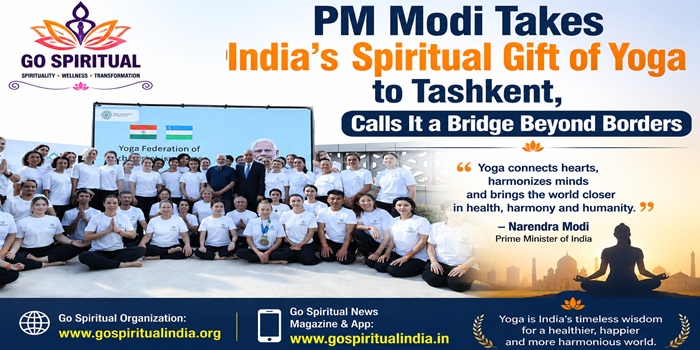

Prime Minister joins Yoga Federation of Uzbekistan session during State Visit; growing popularity of Yoga highlights India-Uzbekistan cultural ties and the universal appeal of India’s ancient tradition of harmony between body, mind and soul
Tashkent: Prime Minister Narendra Modi brought India’s ancient spiritual tradition of Yoga into focus during his State Visit to Uzbekistan as he participated in a special yoga programme organised by the Yoga Federation of Uzbekistan in Tashkent on Sunday, August 30.
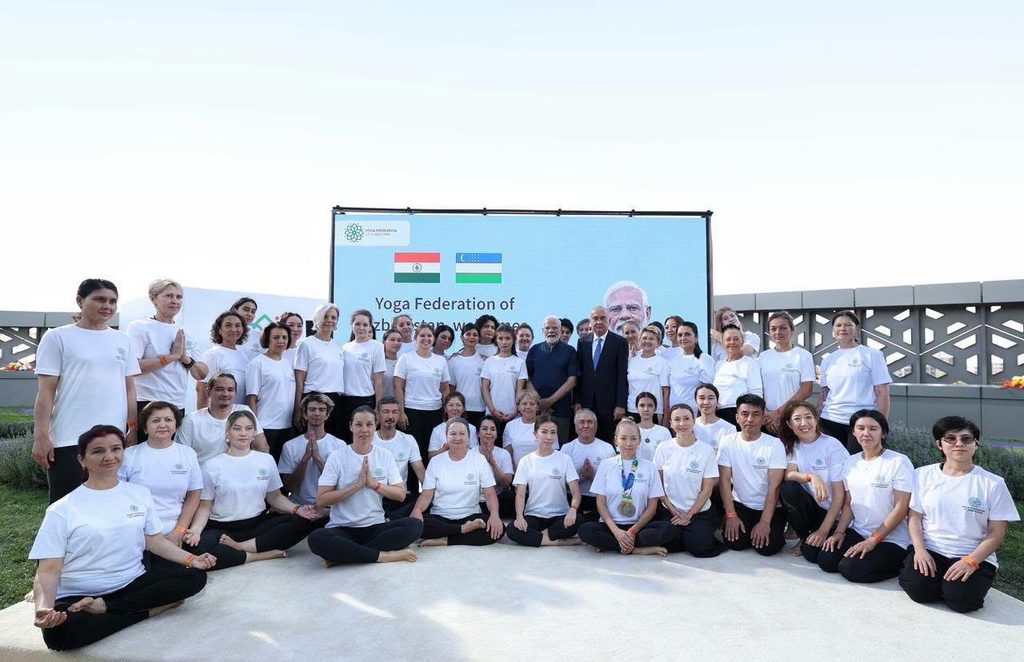
The programme, held during the Prime Minister’s two-day visit to the Central Asian nation, brought together yoga practitioners and young participants in a demonstration of a tradition that originated in India but has grown into a global movement for physical, mental and spiritual well-being. Modi interacted with participants as they performed yoga and later joined them for a group photograph.
The official Press Information Bureau also documented Modi’s participation in the programme at the Hilton Hotel in Tashkent. The event was one of several engagements during his August 29–30 State Visit to Uzbekistan at the invitation of President Shavkat Mirziyoyev.
For Go Spiritual News Magazine & App, the event has significance beyond diplomacy. It reflects how an ancient Indian spiritual discipline has travelled across geographical, cultural and religious boundaries to become a shared global practice.
Yoga: A Bridge Beyond Borders
Modi praised the enthusiasm of the Uzbek participants and described yoga as beneficial for both the mind and soul. He also emphasised its ability to strengthen bonds beyond national boundaries.

The Prime Minister watched the participants perform different yoga practices, interacted with the young practitioners and appreciated their performance. Visuals from the programme showed him walking among the participants before posing for a group photograph.
The Ministry of External Affairs said the programme reflected the growing popularity of yoga in Uzbekistan and its contribution to bringing the people and cultures of India and Uzbekistan closer together.
That growing international acceptance is particularly important to understanding yoga in its original context.
Yoga is often associated internationally with physical postures and fitness, but its Indian roots are much deeper. The Sanskrit word Yoga carries the idea of union or integration. Across India’s spiritual traditions, yoga developed as a path towards disciplining the body and mind, developing inner awareness and ultimately exploring the relationship between the individual consciousness and a deeper spiritual reality.
India’s Ancient Spiritual Wisdom Goes Global
The Tashkent gathering therefore represented more than a wellness session.
It demonstrated how one of India’s oldest spiritual traditions can create a connection between people who may belong to different countries, cultures and religious backgrounds.
Yoga does not require people to abandon their individual identities. Its universal appeal comes partly from practices centred on balance, awareness, self-discipline and inner well-being.
India has increasingly presented yoga internationally as an important part of its cultural and civilisational heritage. During his Independence Day address on August 15 this year, Modi included yoga among the elements of India’s cultural “soft power,” alongside handicrafts, films, animation, gaming, digital content and the broader creative sector.
The Tashkent programme offered a visible example of that cultural connection in action.
Rather than being promoted only through speeches or official programmes, yoga was being practised by people in Uzbekistan themselves.
From Physical Health to Inner Harmony
For Go Spiritual, yoga should also be understood beyond physical exercise.
The deeper spiritual philosophy of yoga encourages an individual to create harmony between body, mind and consciousness. Practices involving physical postures, breathing, concentration, meditation and self-discipline have historically formed different parts of the wider yogic tradition.
This distinction becomes increasingly relevant as yoga grows globally.
Modern lifestyles have brought extraordinary convenience and technological progress, but they have also intensified concerns around stress, anxiety, loneliness and disconnection. In such circumstances, the inward-looking dimension of yoga can offer something that physical exercise alone does not—the opportunity to become more aware of the mind and develop greater balance in everyday life.
Yoga can therefore serve simultaneously as a practice for physical wellness and as a doorway towards meditation, self-awareness and spiritual exploration.
Strengthening India-Uzbekistan Cultural Connections
Modi’s yoga engagement formed part of a wider State Visit focused on strengthening India-Uzbekistan relations.
He arrived in Uzbekistan on August 29 and received a warm welcome from President Mirziyoyev. He also visited the Yangi Uzbekistan Monument, where he laid a wreath and described the site as reflecting the aspirations and progress of the Uzbek people.
During talks between the two leaders, India and Uzbekistan agreed to deepen cooperation across areas including trade and investment, digital connectivity, defence and energy.
President Mirziyoyev also conferred Uzbekistan’s highest state honour, the Order of “Oliy Darajali Do‘stlik”, on Modi in recognition of his contribution to strengthening relations between the two countries.
Against this diplomatic backdrop, the yoga session added an important people-to-people and cultural dimension to the visit.
Governments can strengthen relations through agreements and strategic partnerships, but cultural traditions often build connections at a more personal level. Yoga is particularly suited to such cultural exchange because people can experience and practise it directly.
Yoga Belongs to India, Its Message Can Serve Humanity
India’s contribution of yoga to the world represents an important example of how ancient spiritual knowledge can remain relevant in modern times.
The global popularity of yoga does not diminish its Indian spiritual roots. Instead, its acceptance across continents demonstrates how a tradition born from India’s ancient civilisation can carry a universal message.
The philosophy behind yoga asks individuals to turn inward, discipline the mind, understand themselves better and seek harmony rather than conflict.
At a time when humanity faces war, social division, environmental pressures and growing mental-health challenges, the principles of balance, mindfulness, self-control, inner peace and interconnectedness associated with the broader yogic tradition have renewed relevance.
The sight of young people practising yoga in Tashkent while the Indian Prime Minister interacted with them was therefore symbolic of something larger: India’s spiritual heritage crossing borders without demanding uniformity.
For Go Spiritual News Magazine & App, this is the larger message emerging from Tashkent. Yoga may have originated in India, but its message of inner harmony can speak to humanity as a whole.
When yoga moves beyond the mat and becomes a way of cultivating awareness, compassion, balance and peace, it comes closer to its deeper spiritual purpose.
And in that sense, Yoga is not merely India’s soft power—it is one of India’s most profound spiritual gifts to the world.
Go Spiritual Organization: www.gospiritualindia.org
Go Spiritual News Magazine & App: www.gospiritualindia.in




One Comment