





By Sonu Tyagi, Founder, Go Spiritual & Approach Entertainment
The horrifying assault on a six-year-old girl inside a Panchkula school raises disturbing questions about childhood aggression, parenting, school safety, emotional wellbeing and the erosion of compassion. It is a wake-up call for parents, teachers, educational institutions and society.
The horrifying incident at a government school in Panchkula, Haryana, where an eight-year-old Class 3 student allegedly brutally assaulted a six-year-old girl inside a classroom, has deeply disturbed me. It is difficult to comprehend how a child so young could inflict such serious injuries on another child. The incident is not merely a shocking case of school violence; it raises fundamental questions about the environment in which our children are growing up, the values we are teaching them, the emotional difficulties they may be experiencing and the responsibility of families, schools and society in shaping their behaviour.
According to media reports, the incident occurred on October 28, 2026, at a government school in Sector 20, Panchkula. CCTV footage reportedly shows the boy assaulting the girl inside an empty classroom, including striking her with objects and banging her head against a desk. The girl sustained serious injuries and was admitted to the Postgraduate Institute of Medical Education and Research (PGIMER), Chandigarh. Thankfully, subsequent reports indicate that she regained consciousness and her condition improved, although she continues to require medical care. The Haryana government has suspended the school principal and two teachers following preliminary findings of administrative lapses, while the police and child protection authorities are investigating the circumstances.
What troubles me most is the age of the children involved. We are not talking about adults who have spent years developing prejudices, rivalries or criminal intentions. We are talking about an eight-year-old boy and a six-year-old girl, children who should be learning, playing, making friends and discovering the world with innocence and curiosity. At this age, children should be learning kindness, friendship, sharing, respect and compassion. Instead, we are confronted with an incident of extreme violence that demands serious reflection.

The first question that comes to mind is: What is happening to our children? Are we paying enough attention to their emotional development? Are we teaching them how to deal with anger, disappointment, rejection and frustration? Are we so occupied with academic achievements, examinations, careers and financial success that we are overlooking the importance of character, empathy and emotional wellbeing?
We must be careful not to jump to conclusions about what caused this particular incident. Investigators and qualified child psychologists must examine the circumstances, including the child’s emotional development, personal experiences and environment. We should not automatically blame video games, social media, parenting or any single factor without evidence. However, the incident certainly gives us reason to examine the wider influences shaping children’s behaviour.
Today, many children are exposed to violent entertainment, aggressive language, online conflicts and disturbing digital content at increasingly young ages. Some may also witness anger, humiliation, domestic conflict or harsh punishment in their immediate surroundings. Exposure to such experiences does not mean a child will become violent, but it makes parental guidance, emotional support and age-appropriate supervision especially important.
Children learn not only from what adults tell them but also from what they see adults doing. If parents constantly shout at each other, if family disagreements are resolved through threats and humiliation, or if children repeatedly observe aggression being rewarded, what understanding of relationships are we helping them develop? We cannot expect children to practise kindness and restraint if we do not demonstrate these qualities ourselves.
This is why I have consistently emphasised the importance of strengthening Indian families and restoring meaningful communication between parents and children. A family should not simply be a place where children receive food, clothing, education and material comforts. It should also be a place where they feel emotionally secure, where they can express their fears and frustrations, where they are taught to respect others and where their behaviour is guided with patience and responsibility.
Parents must spend meaningful time with their children. We should know what they are watching, how they are interacting with classmates, whether they are experiencing bullying, whether they struggle to control their anger and whether they feel comfortable discussing difficult emotions. Emotional development cannot be left entirely to schools, just as education cannot be left entirely to parents. Both must work together.
The Panchkula incident also exposes serious concerns about school safety. How could such a violent assault reportedly take place inside a school without timely intervention? How could a young child remain missing from her usual pickup point until her family began searching for her? These questions require transparent answers and accountability. Schools must have reliable student supervision, effective attendance and dispersal procedures, accessible reporting systems and trained staff capable of responding promptly to emergencies.
Installing CCTV cameras is not enough if nobody is effectively monitoring children’s safety. Educational institutions must understand that protecting children is as important as teaching them mathematics, science and languages. Parents send their children to school with trust, believing that they will return home safely. That trust must never be taken lightly.
At the same time, we must recognise that the boy involved is also a child. His alleged actions are extremely serious, and the injured girl deserves justice, protection, rehabilitation and every possible medical and psychological support. But the response to the boy must be guided by the law, qualified professional assessment and the principles of child protection. Public anger should not become an excuse for dehumanising a minor or making unsupported assumptions about his psychological condition.
A child who exhibits extreme aggression requires careful assessment to understand what happened, whether there are underlying emotional or behavioural concerns and what interventions may be necessary. The purpose should be to protect other children, establish accountability and prevent further harm while recognising the developmental needs and legal rights of everyone involved.
As the Founder of Go Spiritual, I believe this incident also raises a larger question about the place of spirituality and moral education in contemporary society. We teach children how to compete, succeed, earn money and achieve recognition. But are we equally committed to teaching them compassion, non-violence, self-control and respect for life?
India has a profound spiritual heritage rooted in values such as Ahimsa, Karuna, Daya and Seva — non-violence, compassion, kindness and service. These principles should not remain confined to religious books, spiritual discourses or ceremonial occasions. They must become part of everyday life, beginning with childhood.
Spirituality, in its truest sense, is not merely about visiting temples, chanting prayers or performing rituals. It is about developing awareness of our actions and understanding how they affect others. A genuinely spiritual society should be one in which children are taught that hurting another person is unacceptable, that anger must be managed responsibly and that kindness is a strength rather than a weakness.
Schools should introduce age-appropriate emotional education, conflict resolution, empathy-building activities, mindfulness and opportunities for children to discuss their feelings. Teachers should receive training to identify concerning behavioural patterns and respond without humiliation or unnecessary punishment. Parents should be encouraged to seek professional guidance when children show persistent aggression or emotional difficulties rather than dismissing these concerns as ordinary mischief.
We also need to examine the growing culture of competition and pressure surrounding childhood. Many children are expected to excel academically, participate in multiple activities and meet adult expectations while receiving insufficient opportunities for unstructured play, emotional expression and genuine connection. Every child is different, and healthy development requires patience, understanding and a supportive environment.
Through Go Spiritual, we advocate mental health awareness, compassionate living, family values, spiritual education and social responsibility. I strongly believe that preventing violence must begin long before an incident occurs. It begins when parents listen patiently to their children, when teachers notice emotional distress, when schools take bullying seriously and when society stops glorifying aggression as strength.
We must also protect the dignity and privacy of the young girl and her family. The circulation of disturbing CCTV footage should not turn a child’s suffering into sensational entertainment. Responsible media coverage must focus on verified facts, institutional accountability, child protection and preventive measures rather than repeatedly displaying graphic images of violence.
The Panchkula tragedy should become a turning point in how we approach children’s safety and emotional wellbeing. The authorities must complete a fair and thorough investigation, ensure accountability wherever negligence is established and strengthen safety procedures across educational institutions. The injured child must receive continued medical care, trauma-informed psychological support and the opportunity to recover without public intrusion.
But our responsibility cannot end with an investigation or a few suspensions. We need a deeper change in the way we raise, educate and guide the next generation.
A society cannot call itself truly developed merely because it has better technology, bigger buildings, modern schools and greater economic prosperity. Its real development must also be measured by the compassion, humanity and emotional maturity it cultivates in its children.
As we pray for the complete recovery of the little girl, we must ask ourselves whether we are doing enough to create a world in which children feel safe, loved, understood and respected.
The Panchkula incident should not simply shock us for a few days before disappearing from public memory. It should compel us to act.
Because when a six-year-old child suffers such violence at the hands of another child, the question is not only what went wrong inside that classroom. The larger question is what we, as parents, educators and society, must do differently to ensure that such violence is prevented.
Our children need education, opportunities and ambition. But above all, they need love, compassion, emotional guidance and the values that make us truly human.
And that responsibility belongs to all of us.
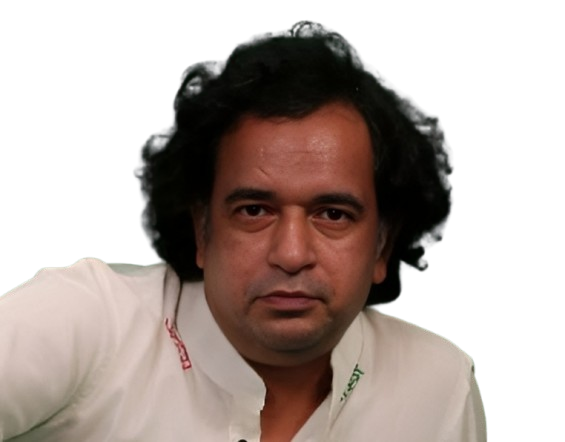
About the Author: Sonu Tyagi is an award-winning writer, director, producer and Founder of Go Spiritual & Approach Entertainment. Through Go Spiritual, he promotes spirituality, mental health and wellness, compassionate living, family values, philanthropy, vegetarianism, animal welfare and social responsibility.
Go Spiritual Organisation: www.gospiritualindia.org
Approach Entertainment: www.approachentertainment.com