



By Sonu Tyagi, Founder, Go Spiritual & Approach Entertainment
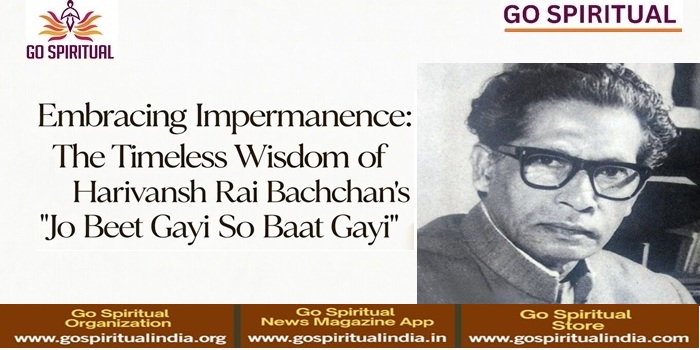
In the hustle of modern life, where every setback feels like a permanent scar and every loss a reason to halt our journey, the poetry of Harivansh Rai Bachchan emerges as a beacon of profound insight. His iconic poem, “Jo Beet Gayi So Baat Gayi,” is not just a literary gem but a spiritual manifesto that urges us to release the grip of the past and flow with the rhythm of existence. As the founder of Go Spiritual and Approach Entertainment, I’ve always believed that true spirituality isn’t about escaping reality but about finding strength within it. This poem, with its simple yet evocative metaphors, offers a motivational blueprint for resilience, reminding us that life’s essence lies in acceptance and forward momentum.
हरिवंशराय बच्चन की रचना
जो बीत गई सो बात गई
जीवन में एक सितारा था

माना वह बेहद प्यारा था
वह डूब गया तो डूब गया
कितने इसके तारे टूटे
कितने इसके प्यारे छूटे
जो छूट गए फिर कहाँ मिले
पर बोलो टूटे तारों पर
कब अम्बर शोक मनाता है
जो बीत गई सो बात गई
जीवन में वह था एक कुसुम
थे उसपर नित्य निछावर तुम
वह सूख गया तो सूख गया
मधुवन की छाती को देखो
सूखी कितनी इसकी कलियाँ
मुर्झाई कितनी वल्लरियाँ
जो मुर्झाई फिर कहाँ खिली
पर बोलो सूखे फूलों पर
कब मधुवन शोर मचाता है
जो बीत गई सो बात गई
जीवन में मधु का प्याला था
तुमने तन मन दे डाला था
वह टूट गया तो टूट गया
मदिरालय का आँगन देखो
कितने प्याले हिल जाते हैं
गिर मिट्टी में मिल जाते हैं
जो गिरते हैं कब उठतें हैं
पर बोलो टूटे प्यालों पर
कब मदिरालय पछताता है
जो बीत गई सो बात गई
मृदु मिटटी के हैं बने हुए
मधु घट फूटा ही करते हैं
लघु जीवन लेकर आए हैं
प्याले टूटा ही करते हैं
फिर भी मदिरालय के अन्दर
मधु के घट हैं मधु प्याले हैं
जो मादकता के मारे हैं
वे मधु लूटा ही करते हैं
वह कच्चा पीने वाला है
जिसकी ममता घट प्यालों पर
जो सच्चे मधु से जला हुआ
कब रोता है चिल्लाता है
जो बीत गई सो बात गई।।………………..
At its core, the poem draws from the ancient spiritual principle of impermanence—a concept echoed in traditions like Hinduism, Buddhism, and even Stoicism. Bachchan paints vivid pictures: a beloved star that falls from the sky, a cherished flower that withers in the garden, and a cup of nectar that shatters on the tavern floor. These aren’t mere losses; they symbolize the transient nature of all things. “Jo beet gayi so baat gayi” (What has passed is gone) isn’t a call to indifference but an invitation to spiritual liberation. In spiritual terms, this aligns with the Bhagavad Gita’s teachings on detachment (vairagya), where Lord Krishna advises Arjuna to perform his duties without clinging to outcomes. By not mourning the “toote taare” (fallen stars) or “sukhe kusum” (withered flowers), the poem encourages us to transcend attachment, fostering a deeper connection with the eternal self—the atman that remains untouched by worldly flux.
From a motivational standpoint, Bachchan’s words are a powerful antidote to the paralysis of regret. In today’s world, where social media amplifies every failure and comparison steals our joy, this poem motivates us to reframe loss as a natural part of growth. Consider the lines: “Par bolo toote taaron par kab ambar shok manata hai” (But tell me, when does the sky mourn its fallen stars?). The sky doesn’t grieve; it continues to shine with countless other lights. This is a motivational nudge to adopt a growth mindset—psychologist Carol Dweck’s term for viewing challenges as opportunities. I’ve seen this in my own entrepreneurial journey with Go Spiritual and Approach Entertainment: ventures fail, partnerships dissolve, but dwelling on them only dims our inner light. Instead, the poem inspires action: rebuild, reinvent, and relish the “madhu” (nectar) that life still offers. It’s a reminder that true motivation comes from within, not from clinging to fragile “pyale” (cups), but from savoring the intoxication of living fully.
Spiritually, the poem delves deeper into the illusion of permanence. Bachchan writes, “Mrudu mitti ke hain bane hue, madhu ghat phoota hi karte hain” (Made of soft clay, these vessels of nectar are bound to break). This evokes the Upanishadic idea that the body and its attachments are like earthen pots—temporary containers for the divine essence. In meditation practices we promote at Go Spiritual, we teach letting go as a path to enlightenment. Motivationally, this translates to resilience training: just as the tavern doesn’t lament broken cups because more await, we too must trust in abundance. The poem’s refrain isn’t defeatist; it’s empowering. It tells the “kaccha peene wala” (immature drinker) who clings to vessels to evolve into one who embraces the flow, unburdened and alive.
As we navigate 2026—a year already brimming with uncertainties—let this poem be our spiritual compass and motivational fuel. In the Go Spiritual News Magazine App, we curate content to uplift souls, and Bachchan’s wisdom fits perfectly. Release the past, honor the present, and step into your power. After all, what has passed is truly gone—leaving space for new stars, fresh blooms, and unbreakable spirit.

Sonu Tyagi is the Founder of Go Spiritual, a platform dedicated to holistic wellness, and Approach Entertainment, bridging creativity with consciousness. Follow us for more insights on spirituality in everyday life. Visit at www.sonutyagi.com & www.approachentertainment.com