





Exclusive | São Paulo – February 4, 2025
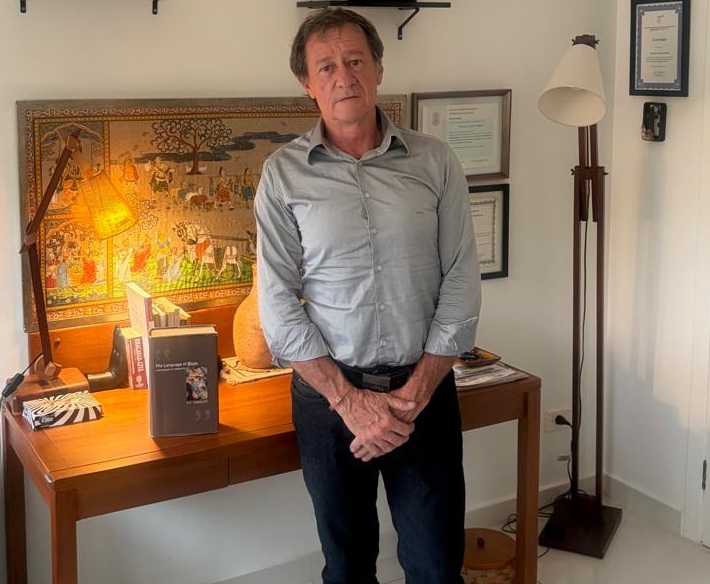
A groundbreaking study by Brazilian psychoanalyst Francisco Antonio Duarte is quietly reshaping how the psychoanalytic community understands one of its most enigmatic figures: Wilfred R. Bion (1897–1979). In his article “W. R. Bion, Vedas and Bhagavad-gītā: Approximations and Emotional Experience”, Duarte reveals compelling evidence that Bion’s childhood immersion in Mathura, India — the sacred city revered as the birthplace of Lord Krishna — left profound traces of Vedic philosophy throughout his clinical theory and spiritual sensibility.
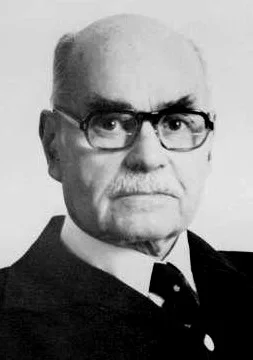
Born in colonial India to British parents, Bion spent his first seven years surrounded by Sanskrit mantras, tales of Krishna, and the devotional atmosphere of one of Hinduism’s holiest cities. Cared for by an Indian ayah who sang Vedic hymns and narrated episodes from the Mahābhārata, the future psychoanalyst absorbed India’s spiritual heritage long before he mastered English.
Decades later, those early impressions resurfaced in unexpected ways. In his famous 1970s Brazilian Lectures, Bion openly quoted verses from the Bhagavad-gītā. He spoke of Arjuna’s battlefield paralysis with the intimacy of someone who had faced the same moral abyss during the trenches of World War I. For Duarte, these are not superficial references but evidence of a deep formative matrix.
“Bion’s concept of ‘O’ — the ultimate unknowable reality that cannot be known, only become — echoes the Vedic Brahman in a strikingly direct way,” Duarte explains. “Both traditions insist that truth is not something the mind possesses; it is something the mind surrenders to through lived emotional experience.”

Among the most striking parallels Duarte uncovers:
- Bion’s pioneering observations of leaderless groups during World War II (which gave birth to modern group dynamics) mirror the Bhagavad-gītā’s explanation of natural social functions arising from the interplay of the three guṇas (sattva, rajas, tamas) — originally a psychological, not hereditary, framework.
- The terrifying “nameless dread” that attacks thought in Bion’s theory finds a surprising counterpart in the Vedic concept of ahaṁkāra, the false ego that generates illusion, separation, and existential fear.
- Both Bion and Krishna repeatedly strip away intellectual ornamentation, insisting that emotional truth arrives naked, without embellishment.
A Personal Journey Behind the Discovery
Francisco Antonio Duarte, an associate member of the Brazilian Society of Psychoanalysis of São Paulo (SBPSP) and professor in the postgraduate course Fundamentos da Teoria e Clínica Psicanalítica in São José dos Campos, did not set out to become a bridge-builder between East and West.
His fascination with Bion began conventionally enough during undergraduate studies on group dynamics. But a deeper, almost mystical encounter occurred years later under the supervision of renowned Bion scholar Dr. Paulo C. Sandler, whose profound knowledge of Bion’s works guided Duarte into the thinker’s enigmatic depths.
Simultaneously, Duarte had been quietly studying Sanskrit and Vedic texts — the Upaniṣads, Śrīmad Bhāgavatam, and Bhagavad-gītā — for over a decade.
The turning point came when he learned that Bion was born in Mathura. That single biographical detail triggered childhood memories of his cousin Advaya, a brilliant polyglot who had joined the Hare Krishna movement in the 1970s. A six-hour conversation with him ended with a gift: a Portuguese translation of the Bhagavad-gītā. From that moment, Duarte’s parallel passions converged into a fourteen-year research project that now spans multiple published articles and book chapters.
“Many parallels were left out of the published article simply for reasons of space,” Duarte laughs. “I reduced the original manuscript to one-tenth of its size. There is material here for an entire book.”
A Universal Psychoanalysis
For Duarte, the implications reach far beyond academic curiosity. By demonstrating that one of psychoanalysis’s most abstract thinkers was quietly shaped by Vedic wisdom, the study challenges the field’s lingering Eurocentrism and opens doors to a truly universal understanding of the psyche.
“Bion never became a Hindu or a devotee,” Duarte emphasizes, “yet something of India’s non-dual vision permeated his clinical attitude. He taught us to approach the unknown with reverence rather than conquest — a profoundly Eastern stance disguised in Western language.”
As psychoanalysis continues to evolve, voices like Duarte’s remind us that the deepest insights into the human mind may emerge precisely at the intersection of traditions long considered irreconcilable.
The full article is available (in Portuguese with English abstract) through Brazilian psychoanalytic journals, such as Ide (São Paulo), and on platforms like Krishna West Brasil. It will soon appear in international publications. For those seeking a psychoanalysis that honors both scientific rigor and spiritual depth, Francisco Duarte’s work arrives as both revelation and invitation.
Go Spiritual News will continue to follow this developing story as Duarte prepares his next publications linking Bion’s late mystical period with the non-dual teachings of Advaita Vedānta and Kashmiri Shaivism.
Namaste and O. They may be closer than we ever imagined.
Download Go Spiritual News Magazine App Now. https://play.google.com/store/apps/details?id=com.spiritual.gospiritual&hl=en_IN&pli=1